How to Choose a Reliable Plumber: Checklist for Homeowners
Plumbing problems don’t wait for a convenient moment. Pipes burst at midnight. Sump pumps quit right before a storm. When water is gushing and stress runs high, you need more than just a name from a search engine. You need someone trustworthy—fast.
At Curtis Key Plumbing, we’ve seen what happens when homeowners rush or skip steps. A little due diligence up front can save you from expensive headaches down the road. Here’s your step-by-step guide to choosing a reliable plumber, whether it’s for routine pipe repair or those “drop everything” emergency plumbing calls.
Why Choosing the Right Plumber Matters 💧
Your home’s plumbing is a hidden lifeline. When it fails, the consequences can be messy—and costly. Imagine trusting your health to a doctor without a license. Letting an unvetted plumber into your home is a similar gamble.
Poor workmanship can lead to:
- Water damage in walls and floors
- Mold growth
- High water bills
- Safety hazards (especially with gas lines or boiler repair)
- Voided warranties on fixtures and appliances
That’s why every homeowner should take plumbing hires as seriously as any other major purchase or repair.
Credentials and Certifications
Before you even think about price, make sure your plumber is legit. Here’s what to check:
- State License: In most areas, plumbers must be licensed. Ask to see their current license and verify it with your state’s licensing board.
- Insurance: They should carry both liability insurance and workers’ compensation. This protects you if something goes wrong on your property.
- Certifications: Look for additional training in specialties like backflow prevention, gas safety checks, or water heater installation. Membership in professional groups (like the Plumbing-Heating-Cooling Contractors Association) is a good sign of ongoing education.
- Permits: For bigger jobs (think sewer line repair or repiping), permits may be required. A reliable plumber will know and handle these according to local code.
Reference: The International Code Council (ICC) and your local Department of Consumer Affairs set the standards for plumbing work and licensing.
Questions to Ask Before Hiring
Don’t be shy. The right plumber welcomes your questions. Here’s what to ask:
- How long have you been in business?
- Can you provide references from recent local jobs?
- Do you specialize in residential work?
- What does your estimate include?
- Who will actually do the work? (Is it the owner, an employee, or a subcontractor?)
- Are your rates hourly or by the job?
- How do you handle unexpected complications?
Always get a written estimate. This should detail parts, labor, and any potential extra charges. Verbal quotes are slippery—like trying to grab water with your hands.
Red Flags to Watch For 🚩
A little skepticism can go a long way. Watch out for these warning signs:
- No proof of license or insurance
- Reluctance to provide references
- Unusually low (or high) quotes
- Pressure to pay in cash, up front
- No written estimate
- Vague answers about process or timeline
- Unmarked vehicles or no branded uniform
- Negative reviews about punctuality or unfinished work
If something feels off, trust your instincts. A “too good to be true” deal often comes with hidden costs.
Emergency Hiring Tips (After-Hours, Holidays) ⏰
Emergencies don’t wait for business hours. The pipe bursts at 2 AM. The toilet overflows on Thanksgiving. Here’s how to stay cool under pressure:
- Check 24/7 Availability: Not all plumbers offer true emergency plumbing. Confirm they actually answer after-hours calls.
- Ask About Emergency Fees: It’s normal for after-hours work to cost more. Get a clear quote before work begins.
- Confirm Essentials: Even in a rush, don’t skip license and insurance checks. Reputable companies are always ready to provide proof.
- Request a Written Summary: Even if the work is urgent, you should get a written summary of what was done and what, if any, follow-up is needed.
A trustworthy plumber will never take advantage of your urgent situation.
How to Avoid Common Hiring Mistakes
Rushing is the enemy. Slow down, even if water is on the floor. Here’s how to sidestep the usual pitfalls:
- Don’t Rely on a Single Quote: Compare at least two, even for emergencies.
- Never Skip the Paperwork: Written estimates and invoices protect everyone.
- Insist on Clear Communication: If you’re confused by what’s being proposed, ask for a plain-English explanation.
- Check Reviews: Look for consistent patterns, not just star ratings.
- Keep Records: Save all paperwork for future reference—especially for big jobs like water heater installation or sewer line inspection.
Industry Standards & Consumer Protection
The plumbing industry is regulated for a reason. National standards (like those from the Uniform Plumbing Code) protect your health and your home. If your plumber doesn’t follow code, you could face fines, insurance issues, or even health risks.
Consumer protection agencies like the Federal Trade Commission recommend:
- Always verifying licenses
- Getting agreements in writing
- Never paying more than a small deposit up front
- Retaining copies of all documents
What About Emergencies? Pipe Repair Near You
When you’re ankle-deep in water, it’s tempting to call just anyone. But even in a crisis, a little caution goes a long way:
- Prioritize companies with real 24/7 emergency plumbing services.
- Ask directly about wait times and arrival estimates.
- Make sure the plumber can handle your specific issue, whether it’s a kitchen plumbing leak, unclogging toilets, or urgent gas line repair.
Remember—jumping at the first number you find could cost you more later.
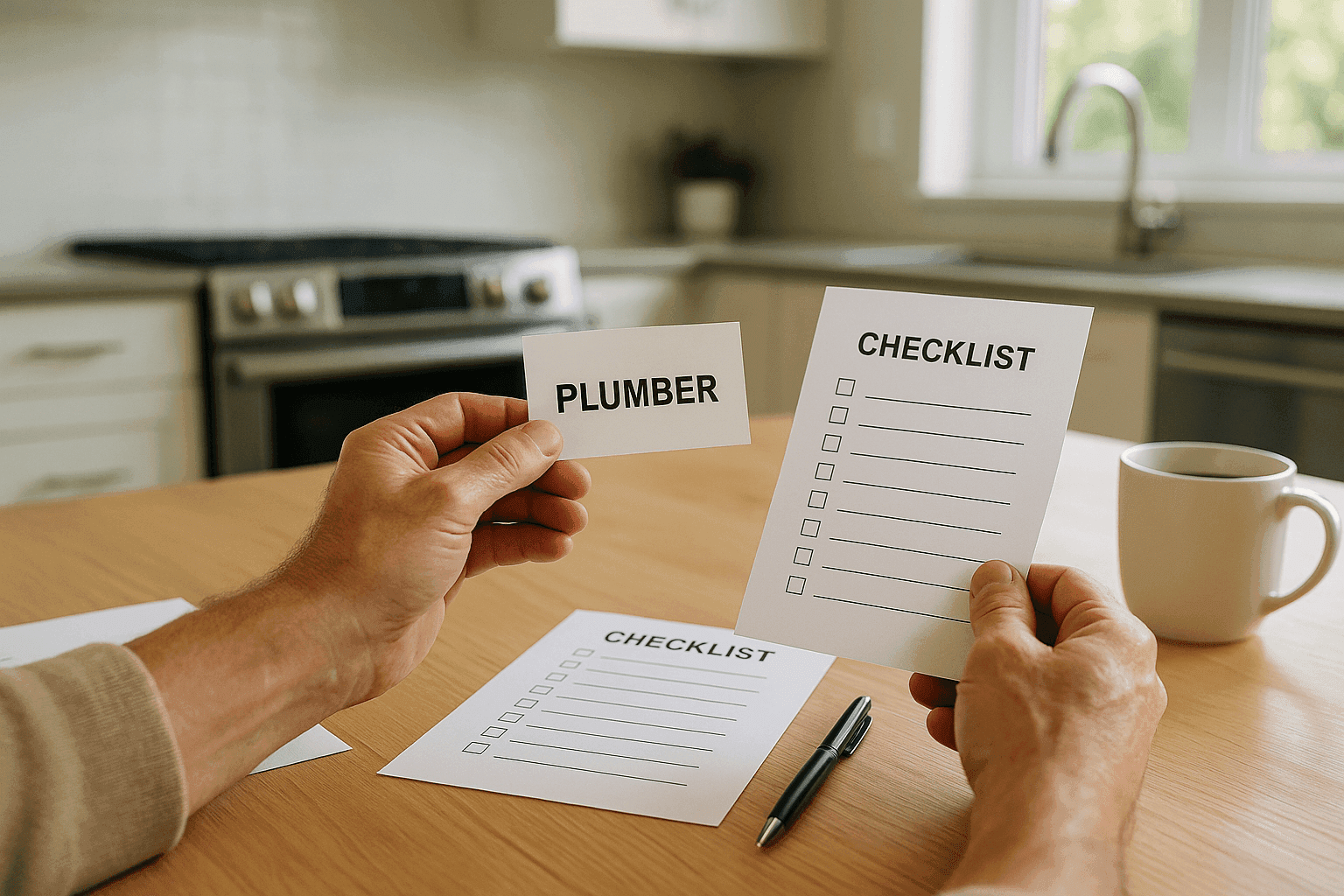
Real-World Checklist for Homeowners
Here’s your quick checklist for hiring a plumber:
- Confirm state license and insurance
- Request written estimate (with all possible charges)
- Ask for references
- Clarify who will do the work
- Review online feedback
- Understand emergency rates, if applicable
- Get all work described in writing
- Keep all paperwork for your records
Tape this to your fridge. When the next plumbing issue strikes, you’ll be ready.
FAQ
What if my plumber finds extra problems once they start?
A reputable plumber will pause, explain, and get your approval before doing extra work. Everything should be documented.
How do I know if I need emergency plumbing or if it can wait?
If water is spreading, sewage is backing up, or there’s a risk of property damage, call for emergency plumbing. Minor drips or slow drains can usually wait for regular hours.
Should I hire a plumber who can start right away?
Speed is important, but so is quality. Vet your plumber first—even if you’re in a rush.
Is it okay to ask about warranty on parts or labor?
Yes. While you shouldn’t expect wild promises, most reputable plumbers will clarify what’s covered and for how long.
Local & Seasonal Considerations 🌧️
Seasons matter in plumbing. In winter, frozen pipes are a big concern. Summer storms can overwhelm sump pumps. In older homes, pipes might be more fragile or not up to current codes. A good plumber will ask about your home’s age, recent renovations, and any past plumbing problems.
If you live in an area with hard water, water filtration systems may be worth discussing. For those in flood-prone zones, ask about backflow prevention and sump pump maintenance.
Wrapping Up: Protect Your Home & Peace of Mind
When it comes to your home’s plumbing, shortcuts lead to setbacks. A careful, step-by-step approach will help you avoid costly surprises and ensure your repairs or installations are done right the first time.
Whether you’re planning a bathroom upgrade or facing a midnight leak, Curtis Key Plumbing is here to help—day or night.
Call Curtis Key Plumbing now — or reach us anytime at 888-890-1791 .